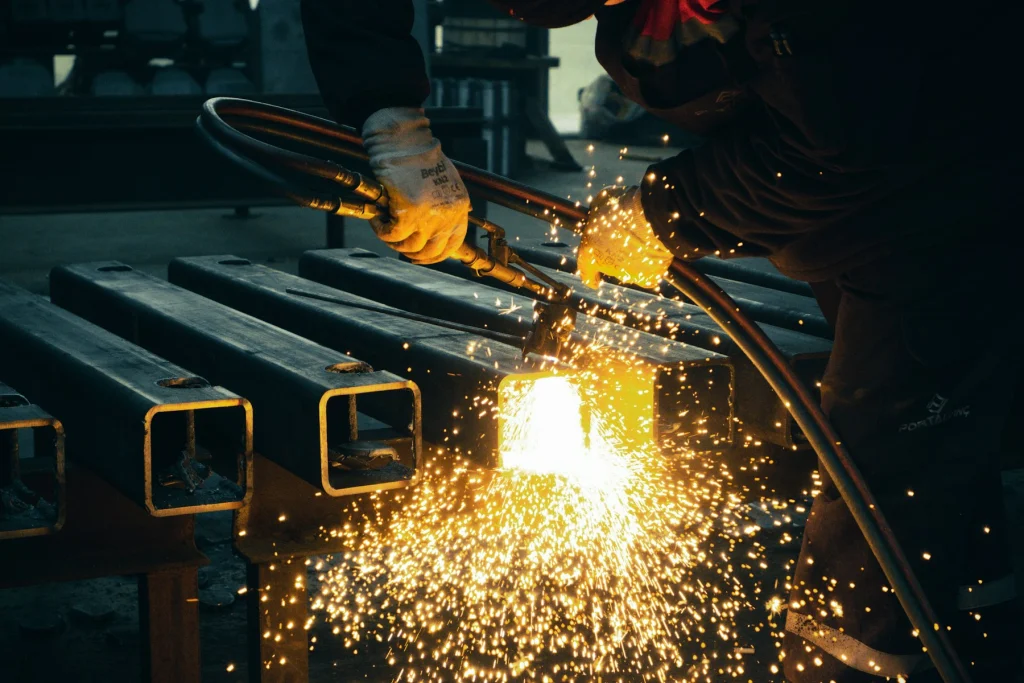
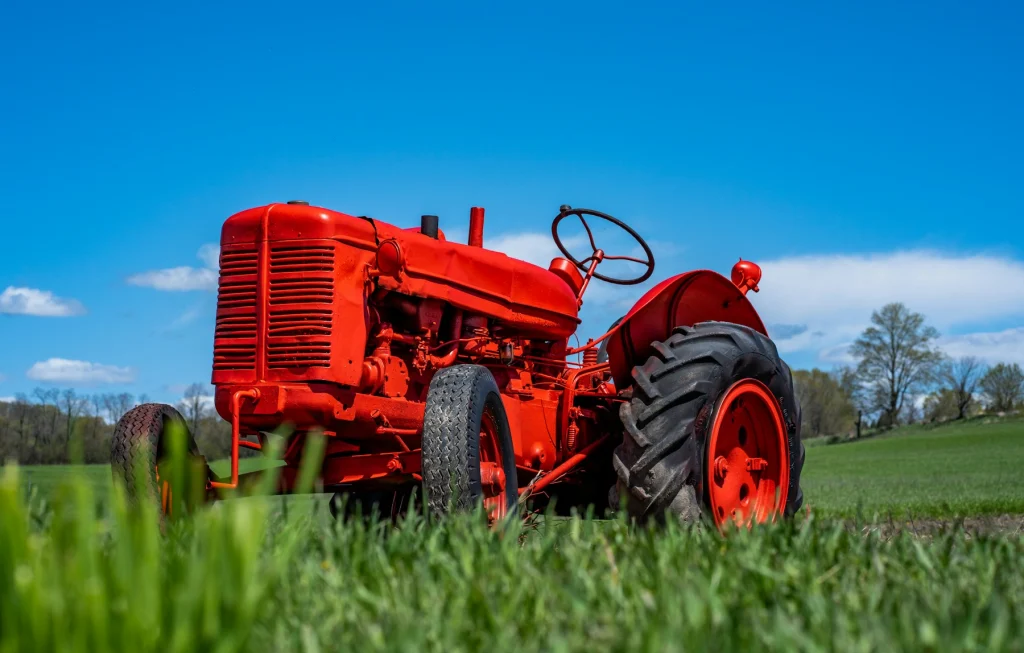
Field repairs on farm equipment last when the welder treats a crack as a symptom, not just a gap to fill. A lasting repair on a loader arm, backhoe boom or cracked frame means finding the end of the crack, stopping it, grinding a proper groove, welding with low-hydrogen filler, and reinforcing without creating a new weak spot.
When a tractor, skid steer or backhoe breaks in the middle of hay season or a fence-building job, hauling it to a shop is often the worst option. The machine may not be safe to drive or load, the shop may be backed up, and the work stops either way. That is the problem mobile welding solves. But a field repair is only worth doing if it holds, and too many cracked loader arms get a quick bead laid over the top that cracks again a few weeks later, right beside the weld. This guide explains why equipment cracks, how we repair it on-site, and what you can do to keep it from happening again.
Key takeaways
- Fatigue cracks start at stress points: weld toes, holes, sharp corners and sudden changes in section.
- Stopping the crack tip and grinding the crack out completely matters more than how pretty the weld looks.
- Low-hydrogen electrodes like E7018, kept dry, are the standard for structural equipment repairs.
- Reinforcing plates should have tapered or rounded ends; square plates create new stress points.
- Hydraulics, electronics and bearings need protecting before the arc ever strikes.
Why does farm equipment crack?
Most cracks on loaders, booms and frames are fatigue cracks. The steel was strong enough for any single load, but thousands of repeated cycles, lifting, dumping, bouncing over terraces, prying at stumps, slowly opened a crack at the weakest point. Fatigue cracks grow a little with each cycle until the remaining steel cannot carry the load.
Where cracks start
- Weld toes. The edge where a factory weld meets the base metal is a natural stress riser, especially if there is undercut.
- Holes and slots. Pin bores, bolt holes and cutouts concentrate stress at their edges.
- Corners and section changes. Anywhere a thick piece meets a thin one, or a box section ends abruptly, stress piles up.
- Previous repairs. A poorly made repair weld, or a square-ended plate welded across a flange, often becomes the next crack.
Overload and misuse
Some cracks are straight overload: prying with the bucket, picking up more than the loader was rated for, or using a pallet fork as a battering ram. Those cracks are often accompanied by bent steel. Repairing them is possible, but the bend has to be addressed too, and it is worth asking whether the machine is the right size for the job.
Heat plays a part too. Steel that has been bent and straightened, or welded on repeatedly over the years, can have hard, brittle zones around old repairs. When we find a stack of previous patches on the same spot, we often cut back to clean, original steel rather than welding on top of someone else’s work. It takes longer, but it gives the new weld sound metal to fuse into.
Loader arm repairs
Front-end loader arms on tractors and skid steers take heavy bending loads, especially where the arm bends near the pivot, where the cylinder mounts attach, and where the crossmember ties the two arms together. Cracks in those spots are some of the most common equipment repairs we see.
How we repair a cracked loader arm
- Clean and inspect. Degrease the area and grind off paint to find the full length of the crack. Dye penetrant can reveal how far a crack really runs, which is usually farther than it looks.
- Stop the crack. A small hole drilled just past the tip of the crack blunts it so it cannot keep running while we work.
- Gouge or grind it out. The crack is removed completely with a grinder or air-arc gouge, leaving a clean V or U groove down to sound metal.
- Preheat when needed. Thick sections and higher-strength steels are warmed before welding to slow cooling and reduce the risk of cracking in the heat-affected zone.
- Weld in layers. The groove is filled with multiple passes of a low-hydrogen electrode such as E7018, with slag cleaned between passes.
- Finish and reinforce if needed. The weld is ground flush where a smooth profile matters, and a reinforcing plate with tapered ends is added if the section was undersized for the work.
Why low-hydrogen rod matters
Hydrogen trapped in a weld can cause delayed cracking in thick or hardened steel, sometimes hours after the repair looks done. E7018 and similar low-hydrogen electrodes keep that risk down, but only if the rods stay dry. On our truck they live in a heated rod oven. A box of 7018 left open in a humid barn absorbs moisture and loses that advantage.
Backhoe and boom repairs
Backhoe booms and dipper sticks see huge loads at their pivots, cylinder ears and the stops that limit swing. Cracks show up at cylinder mounting ears, at the boom foot near the swing frame, and along box-section seams. The repair approach matches the loader arm, with extra attention to two things.
First, the pivot bores. Worn or egg-shaped bores are often the reason a boom cracks, because slop lets the boom hammer every time it changes direction. Welding up worn bores and line boring them back to size is specialized machine work. We can build up the material on-site, but the boring needs the right equipment, and we will tell you if that part needs a specialist.
Second, alignment. A boom that has been bent or twisted needs to be checked before welding, because welding a crack on a misaligned boom locks the misalignment in. Clamping and heat-straightening can correct modest distortion before the repair is welded out.
Quick-attach plates and attachments
Skid steer and tractor quick-attach plates, pallet forks, grapples and bale spears crack at the plate where the hooks or wedges engage and where the attachment’s uprights meet the mounting plate. Those cracks spread fast because the plate flexes every time the attachment is loaded. The repair follows the same steps as a loader arm, and it is often worth adding a gusset at the corner that cracked, shaped so it eases the load into the plate instead of ending abruptly.
What is the right way to repair a cracked frame?
Frame cracks on tractors, hay equipment, shredders and implements are where the most damage is done by quick fixes. A frame carries loads in multiple directions, and a careless repair can make the next crack worse.
Fish plates and reinforcement done right
A reinforcing plate, often called a fish plate, can restore strength to a cracked frame rail. The mistakes are common, though. A rectangular plate welded all the way around, especially with welds running straight across a tension flange, creates two new stress points at the ends of the plate. The frame often cracks right there.
- Plates should have tapered, diamond or rounded ends so stiffness changes gradually.
- Welds across the flange should be avoided where possible; longitudinal welds along the plate edges usually perform better.
- The original crack is still ground out and welded first. A plate over an unrepaired crack just hides it.
- Plate thickness is matched to the frame, not oversized. A plate much stiffer than the frame moves the problem rather than solving it.
Cast parts and hardened steel
Some components are cast iron or cast steel, such as certain axle housings, transmission cases and brackets. Cast iron needs special electrodes, often nickel-based, careful preheat and slow cooling, and even then some castings are better replaced. Wear parts like bucket cutting edges and teeth are often hardened or abrasion-resistant steel, which needs the right filler and preheat. We identify the material before choosing a procedure, and when a part is not a good candidate for welding, we say so.
Protecting the machine before welding
Modern farm equipment has electronics, sealed bearings and hydraulic systems that welding current and heat can damage. These steps happen before the first arc on every equipment repair.
- Disconnect the battery, and on machines with electronic control modules, follow the manufacturer’s guidance for protecting them during welding.
- Ground right at the repair. Welding current that finds its way through bearings, pins, gears or cylinder rods can pit those surfaces.
- Relieve hydraulic pressure and protect hoses. Lower attachments to the ground, block anything that could move, and shield hoses from heat and spatter. Never weld on or near a pressurized hydraulic cylinder.
- Clear fuel and debris. Hay, chaff and oil-soaked dirt around a machine catch sparks fast. We clean the area and keep water or an extinguisher at hand.
- Block and support. A loader arm or boom being repaired is supported so it cannot drop when steel is cut.
When are field repairs on farm equipment not the right call?
Sometimes the honest answer is that a part needs replacement or shop work. Cracks through a cast housing, severely bent structures, worn bores needing line boring, and failed components that the manufacturer says must be replaced are examples. Our job on those calls is to tell you plainly, help you sort out what can be fixed in the field, and get the machine back to work as quickly as the situation allows. For more on that decision, see our breakdown of mobile welding vs shop welding.
Keeping repaired equipment from cracking again
A sound weld solves today’s problem. A few habits keep the next one away. Grease pivot pins on schedule, because dry pins wear the bores, and worn bores let the arm hammer itself apart. Stay within the loader’s rated capacity, and avoid prying or pushing sideways with a bucket that was built to lift. Walk around the machine with a rag and a flashlight every so often; a fresh crack shows up as a hairline rust streak or a line in the paint long before it becomes a break. Catching a crack at an inch is a quick repair. Catching it at a foot is a much bigger job.
Equipment repair checklist
Before you call, and before we arrive, a little preparation speeds things up.
- Take clear photos of the crack, the area around it and the whole machine.
- Note the make and model, and whether the crack has been welded before.
- Park the machine on firm, level ground with attachments lowered.
- Pressure-wash or scrape the repair area if you can; caked grease and mud take time to remove.
- Clear hay, chaff and fuel cans from around the machine.
- Have the manual handy if the machine has electronics or welding precautions listed.
- Tell us how the machine is used, so reinforcement can match the work.
Frequently asked questions
Will a welded loader arm be as strong as the original?
A properly prepared and welded repair, with the crack fully removed, low-hydrogen filler and good fusion, can restore the arm’s original strength. Whether it lasts depends on also fixing the cause. If the crack came from overloading, worn pivots or a poor factory detail, the repair may include reinforcement or other changes so the same stress does not crack it again nearby.
Can you weld on a tractor without damaging the electronics?
Yes, with precautions. We disconnect the battery, place the ground clamp right at the repair so current does not wander through the machine, and follow the manufacturer’s guidance for any electronic modules. Some manufacturers recommend unplugging specific control units before welding. Having the operator’s manual on hand helps, and we will ask about it for newer machines.
Why does a crack come back right next to the old weld?
Usually because the crack was not fully removed, the weld had undercut or poor fusion at the edge, a square-ended reinforcing plate created a new stress point, or the underlying cause, like worn pivots or overloading, was never fixed. A repair that addresses the crack tip, joint preparation, weld profile and the root cause rarely comes back.
Do you repair bucket cutting edges and teeth?
We replace and weld on cutting edges, side cutters and tooth adapters, and we hardface worn edges when that makes sense. Many wear parts are abrasion-resistant or hardened steel, which needs the right filler and preheat to avoid cracking. Bolt-on edges are often the better long-term choice, since they can be swapped without welding when they wear out.
How long does an on-site equipment repair take?
It depends on the crack length, the steel thickness, how much cleaning and disassembly is needed, and whether reinforcement is added. Many single-crack repairs are finished in one visit. Larger jobs, or ones that need parts ordered or machine work done elsewhere, may take more than one trip. We give you a realistic range when we quote.
Our equipment repair service covers tractors, loaders, skid steers, backhoes, hay equipment and implements on your property, and our ranch and farm welding visits often pair machine work with fence and pen repairs. If you also haul with the machine, our guide to livestock trailer repair covers the trailer side. Contractors running equipment on commercial sites can see our structural and commercial welding page. Send photos of the crack and the machine’s location through the Get a Quote form, and we will reply with a free written quote.