Quick answer
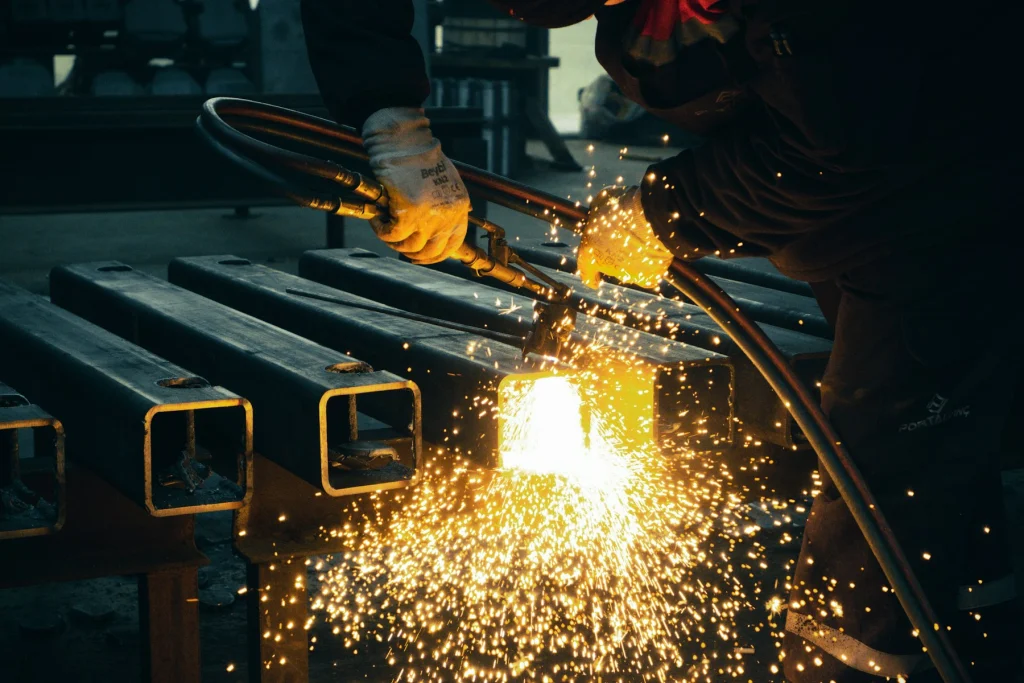
Ranch and farm welding is on-site repair and fabrication of livestock and agricultural steel: pipe fence, corrals, working alleys, cattle guards, gates, feeders and chutes. A mobile welder brings a self-powered rig and pipe stock to the property, cuts out damage, fits new steel and welds it in place, typically with stick or flux-core for outdoor conditions.
Key points
Pipe fence, sucker-rod fence and continuous panel repairs welded in place
Corrals, alleys, crowding tubs and loading chutes rebuilt to hold cattle and horses
Cattle guards repaired, re-railed or set on new bases
Hay feeders, bunks, trough frames and windmill tower repairs
Work planned around grazing rotations, working days and county burn bans
What ranch and farm welding covers on a working place
On a typical North Texas place, the steel that needs attention is spread across a lot of ground. A corner brace in the back pasture, a crowding tub that bent when a cow hit it sideways, a hay ring with a cracked hoop and a stock trailer gate that will not latch all end up on the same list.
We treat that list as one job. The rig moves from repair to repair, and you get a single visit instead of four separate calls. Here is what usually shows up on it:
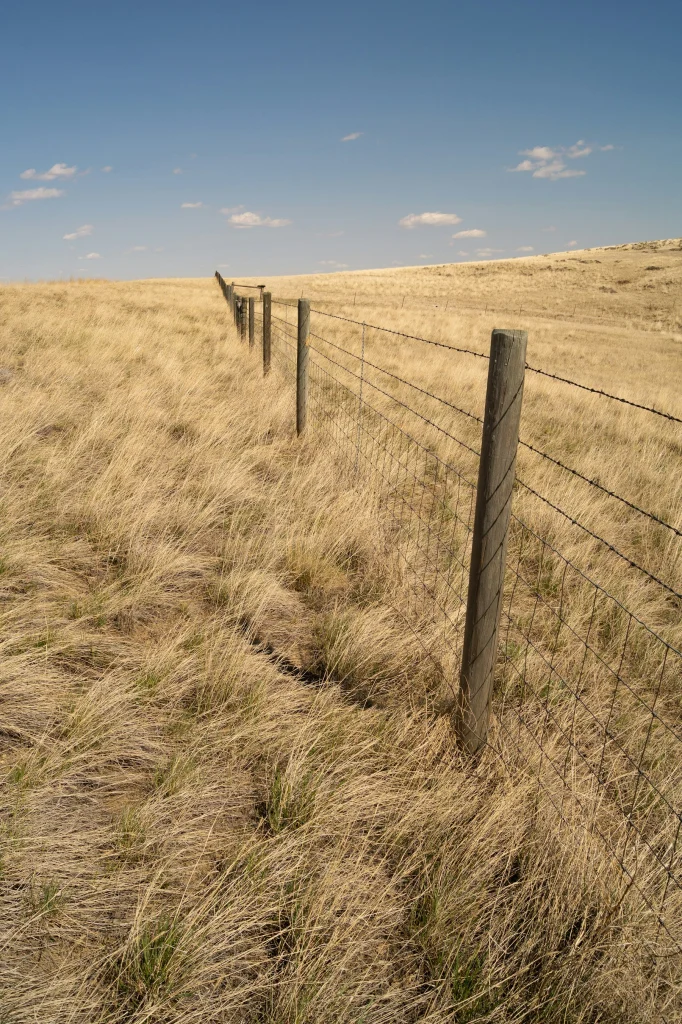
Pipe and sucker-rod fence: broken welds at posts, sagging top rail, H-brace and corner assemblies
Livestock pens, sorting alleys, crowding tubs, squeeze chute frames and loading chutes
Cattle guards, wing panels and the bases they sit on
Hay feeders, bunk feeders, creep feeder frames and water trough supports
Pipe gates and their hinge posts, covered in more depth on our gate and fence repair page
Implement hitches, three-point arms and brush cutter decks, which overlap with our equipment repair work
Pipe fence and sucker rod: the North Texas standard
A lot of Texas ranch fence is built from reclaimed oilfield material: tubing or drill pipe for posts, commonly in sizes like 2-3/8 or 2-7/8 inch outside diameter, with sucker rod or smaller pipe for rails. It is strong, cheap for what it does and nearly impossible to wear out, but the welds at each post take a beating from cattle leaning, trees falling and ground movement.
Used pipe has its own quirks. It often carries mill scale, internal coatings, rust and sometimes residue from its first life, all of which fight a clean weld. We grind back to bright metal where the joint goes and favor stick electrodes like E6010 or E7018, or a self-shielded flux-core wire, because they tolerate imperfect surfaces and wind far better than MIG does in an open pasture.
For new runs, the joint design matters as much as the bead. Saddle-cut or fish-mouth fits on pipe-to-pipe joints give the weld more surface to grab than a flat butt against a round post. Caps on post tops keep rain from filling the pipe, which slows the internal rust that eventually rots a post off at ground level.
Pens, alleys and working facilities that hold up to cattle
Working facilities take the hardest abuse on any place. A thousand-pound animal pushing sideways on a panel puts real load on the welds at the posts, and a crowding tub or alley that flexes every time cattle move through it will crack sooner or later.
When we repair a pen, we look at why it failed. A panel that keeps breaking at the same post often needs a gusset, a heavier post, or a mid-rail support rather than a bigger bead. Sheeted alley sides need solid stitch welds that will not tear the sheet when an animal kicks it. Sliding and swinging gates inside the system need hinges and latches that cattle cannot lift.
Rebuilds go faster when you have a rough plan. A sketch with gate positions, alley width and the direction cattle flow helps us show up with the right pipe and enough of it. If you want something new designed from scratch, our custom fabrication work covers full builds.
Cattle guards: repair, rebuild or replace?
Cattle guards fail in a few predictable ways. Rails crack loose from the cross members after years of truck traffic, a guard sinks because the base or footing washed out, or the wings get hit by a trailer and bent into the opening. Each one calls for a different fix.
Cracked rail welds can usually be ground out and re-welded in place, sometimes with added gussets at the cross members. A guard that has settled needs to be lifted and set on a sound base, which means coordinating with whoever does the dirt or concrete work. Wings are straightforward to straighten or rebuild.
Load rating is the honest limit. A guard built for pickups is not the same as one built for loaded cattle pots, grain trucks or oilfield traffic. If your traffic has changed, we will tell you whether repair makes sense or whether a properly rated replacement is the safer call.
Feeders, troughs and the small steel that adds up
Hay rings, bunk feeders and trough frames are not glamorous, but replacing them adds up fast. Most failures are cracked welds at hoops and legs, rusted-out bottoms, or frames that got pushed around by a tractor spear one too many times.
These repairs are a good fit for a visit already on the calendar. While the rig is set up for a fence or pen job, patching three feeders and reinforcing a trough stand adds welding time but no extra drive. We usually finish repairs on feeders with a cold galvanizing coat, since manure and standing water are hard on bare steel.
How a ranch & farm welding job works with Fort Worth Mobile Welding
01
Walk the list
Send photos of each repair and a rough map or description of where they sit on the property, plus any gate codes or access notes.
02
Scope and schedule
We reply with a written quote and pick a day that works around your cattle, the weather and any county burn restrictions.
03
Weld in the field
The rig moves from job to job: cut out damage, fit new pipe or plate, weld, then coat fresh steel against rust.
04
Check it together
We walk the repairs with you, test gates and latches, and haul off scrap and rod stubs before leaving.
How much does ranch welding cost per job?
There is no honest flat rate for ranch work, because the same task can take twenty minutes or half a day depending on the place. What we can do is tell you exactly what drives the number so the written quote makes sense when you get it:
Drive time to the property and how far the work sits from the nearest gate or road
Ground conditions: a dry pasture is easy, a muddy creek bottom may need a different day
How much material gets replaced, and whether you supply pipe or we bring it
Condition of the existing steel, since badly rusted pipe has to be cut back to sound metal
Whether livestock are moved before we arrive or have to be worked around
The number of separate repairs that can share one setup
Planning welding around grazing, calving and burn bans
Timing matters on a ranch. Working pens are best repaired before shipping or weaning, not the morning of. Pasture fence is easier to fix when the pasture is rested. And a crew in a pen full of nervous heifers during calving season helps nobody.
Fire is the bigger concern in summer. Grinding sparks and welding spatter can light dry grass in seconds, and many Texas counties issue burn bans during drought. Some county orders allow welding and cutting with precautions, others restrict it, so check your county's current order. On our end, we clear or wet down the area, keep extinguishers and water at hand, and keep watching after the last weld cools.
Tell us about your schedule when you request a quote. A ranch that runs cattle on leased land in several counties, or even across state lines, can often have its fence and pen work batched into one trip. Our service areas page explains how we handle work farther from Fort Worth, and our blog has more on keeping ranch steel in shape between visits.
Frequently asked questions
Can you weld pipe fence with cattle in the pasture?
Often, yes, as long as the animals are calm and can be kept away from the immediate work area. Sparks, noise and the truck can spook livestock, so moving cattle to another pasture or pen is safer for everyone. For pens and alleys, the animals need to be out entirely. Let us know the setup when you request a quote.
Do you bring pipe, or should I supply it?
Either works. We carry common sizes of pipe, tube, angle and flat bar for typical repairs. If you already have a stack of used oilfield pipe or sucker rod on the place, using it can lower material cost. We will check that it is sound and suited to the job before we weld it in.
Is used oilfield pipe safe to weld?
Generally, yes, once it is cleaned and inspected. It can carry rust, scale, internal coatings and occasionally residues from its original service, so we grind to bright metal at every joint and avoid cutting into anything that may have held pressurized product without checking it first. Stick and flux-core processes handle used pipe well.
What is the best way to stop pipe posts from rusting off?
Cap the tops so rain cannot collect inside, set posts in concrete crowned to shed water away from the steel, and coat the zone near ground level where rust starts. On repairs, we cut back to sound pipe, weld a cap or a new section, and finish with cold galvanizing compound on the bare metal.
Can you build a new set of pens from scratch?
Yes. New corrals, sorting alleys, crowding tubs and loading chutes are welded on-site from pipe, sucker rod and sheet. A rough layout with gate positions, alley widths and cattle flow helps us plan material. For large builds, the work is scheduled over several days so posts can be set and cured before rails go on.
Do you work on farms outside Tarrant County?
Yes. Parker, Wise, Johnson, Hood and Denton county properties are routine. Farther-off ranch work is scheduled as a planned trip, often grouped with other repairs in the same area. Include the property location and everything on your list in the quote request so we can plan the visit efficiently.