Quick answer
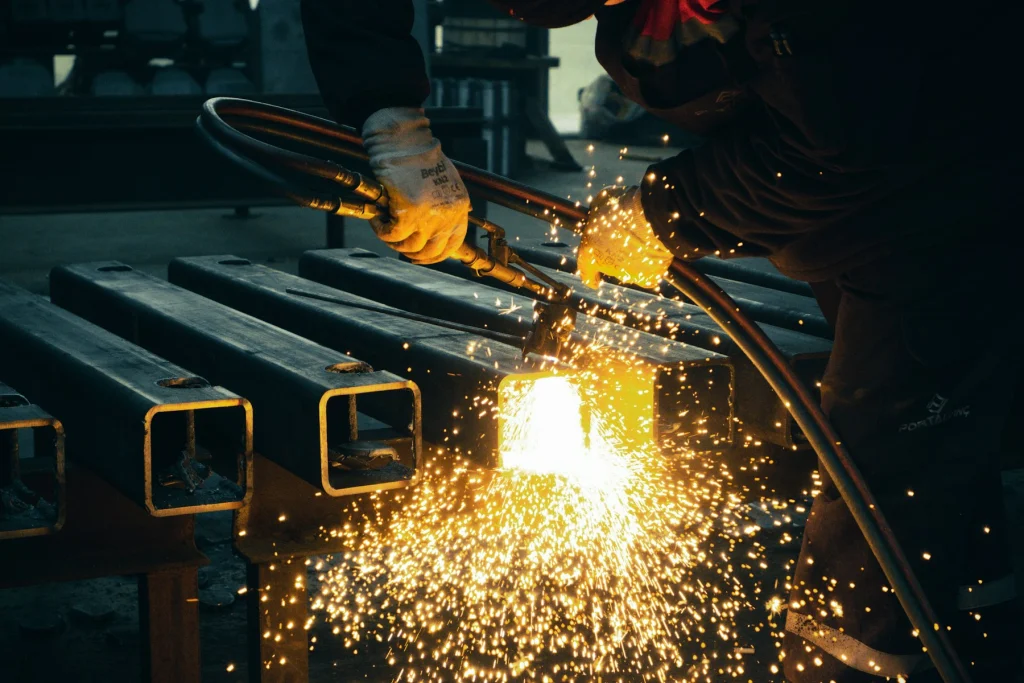
Equipment welding repair is the on-site repair of heavy and farm machinery steel: loader buckets, grapples, skid steer attachments, brush cutter decks, box blades, three-point hitches, booms and frames. A mobile welder cuts out cracks, rebuilds worn edges and pin bores, adds reinforcement, and uses the right preheat and filler for wear-resistant steel and castings.
Key points
Buckets, cutting edges, side cutters and teeth adapters rebuilt
Grapples, forks, pallet frames and skid steer quick-attach plates repaired
Brush cutter decks, box blades, disc frames and three-point hitches
Cracked frames, booms and loader arms reinforced with proper prep
Hardfacing and wear plates added to stretch the life of working edges
Battery disconnect and grounding practices that protect electronics
Why fix equipment in the field?
Moving a broken machine costs more than most people expect: a lowboy or a big enough trailer, someone to load it, a shop queue that might run a week or more, and then the trip back. Meanwhile the hay is not getting moved, the brush is not getting cut and the job site is waiting on dirt.
Field welding cuts out the transport and the queue. On many jobs, a cracked bucket or a torn deck can be repaired and the machine put back to work the same day. When a repair does need parts, we can usually tell you from photos what to order so it is on hand when the rig arrives.
Most of our equipment calls come from ranches, farms and small contractors around Tarrant, Parker and Johnson counties. If a machine is part of a bigger list, such as pens and fence on the same place, our ranch and farm welding visit can cover both.
Loader buckets, grapples and skid steer attachments
Buckets wear in predictable places: the cutting edge, the bottom skin right behind it, the corners and the side cutters. Cracks show up where the back of the bucket meets the mounting plate, and the quick-attach plate on a skid steer bucket can bend or crack from prying.
Repairs range from welding a crack and adding a gusset to replacing a worn-through bottom skin with new plate. Bolt-on cutting edges are usually replaced as parts; weld-on edges can be cut off and replaced with new edge material. Grapple tines and cylinder mounts are another common job, especially on root grapples used for brush clearing.
We check pin bores while we are at it. Ovaled bores let pins move and wear faster, and they can be built up with weld and re-bored, or fitted with a new bushing, depending on the wear.
Brush cutters, box blades and three-point implements
Rotary cutters take a beating from stumps, rocks and the occasional buried T-post. Deck skins tear, gearbox mounting plates crack and tail wheel arms bend. A cracked gearbox mount is worth fixing early, because a loose gearbox can destroy the deck around it.
Box blades, disc harrows, rippers, post-hole diggers and pallet forks all come through the same way. Three-point hitch arms, top-link brackets and drawbar hitches crack at their welds, and drawbars bend under loads they were not built for. These repairs are a natural fit when we are already on the property. For implements that you tow behind a truck rather than a tractor, see our trailer repair page.
Frames, booms and castings: what can be welded?
Most equipment frames, loader arms and booms are carbon or low-alloy steel and weld well with the right prep. Cracks are ground or gouged out completely, preheated where the steel is thick, welded with low-hydrogen filler such as E7018, and often reinforced with a plate shaped to spread the load.
Castings are different. Cast iron and cast steel parts, such as some gearbox housings, axle housings and older hitch components, can crack again from welding heat if they are not preheated, welded with nickel-based filler and cooled slowly. Some cast parts are better replaced, and we will tell you which side of the line yours falls on.
Anything that is a safety-critical rated component, such as a ROPS frame, a lifting hook or a crane boom, is a replacement or manufacturer-repair item, not a field weld. We will not weld those, and you should be wary of anyone who offers to.
Hardfacing and wear plates
Hardfacing lays a layer of very hard weld metal on surfaces that wear, such as bucket edges, ripper shanks, auger flights and box blade cutting edges. Done in a stringer or dot pattern, it can multiply the life of a part in sandy or rocky ground.
Abrasion-resistant plate, often sold under grades like AR400 or AR500, is another option for bucket bottoms and wear strips. It needs the right low-hydrogen filler and usually a preheat to avoid cracking. We will recommend hardfacing or AR plate only where the wear pattern justifies it, since both add cost.
How a equipment repair job works with Fort Worth Mobile Welding
01
Send machine details
Photos of the damage, the whole machine or attachment, and the make and model help us plan filler, plate and preheat.
02
Repair or replace call
Your written quote says which parts we weld, which should be replaced as parts, and what to have on hand.
03
Prep and weld
We disconnect power, protect hydraulics and wiring, cut out cracks, preheat as needed and weld with the right filler.
04
Reinforce and return
Plates or gussets go where the part keeps failing, welds are cleaned and coated, and the machine goes back to work.
Before we strike an arc on your machine
Welding on a machine with electronics, hydraulics and bearings takes some care. Here is what we do, and what you can do to help:
Disconnect the battery, and on machines with sensitive control modules, follow the manufacturer's guidance for welding
Clamp the ground as close to the weld as possible so current does not travel through bearings, pins or cylinders
Shield hydraulic hoses, wiring and seals from heat and spatter, and never weld on a pressurized cylinder or line
Lower attachments to the ground and block any raised component so nothing moves while we work
Clean off grease, dirt and hydraulic oil around the repair if you have time before we arrive
Clear dry grass, hay and fuel from the area, since sparks travel farther than people expect
What does equipment welding repair cost compared with downtime?
The welding is often the smaller part of the cost. A machine sitting idle while hay rots in the field, a crew waiting on a skid steer, or a rental to cover the gap can dwarf the repair bill. That is the real comparison when you weigh a field repair against hauling to a shop.
What drives the welding price itself is the size of the damage, the thickness and type of steel, how much material gets replaced, any preheat or special filler required, access to the repair area and the drive to your location. Send clear photos and the machine make and model, and your written quote will break that down. If you are looking at a new attachment instead, our custom fabrication page covers one-off builds like bale spears and pallet forks.
Frequently asked questions
Can you weld on a tractor or skid steer without damaging the electronics?
Yes, with the right precautions. We disconnect the battery, follow the manufacturer's guidance where it exists for control modules, and clamp the ground close to the weld so current does not pass through bearings or electronics. Modern machines are more sensitive than older ones, so tell us the make and model in advance.
Is it worth repairing a worn-out loader bucket?
Often, yes. If the back, sides and mounting plate are sound, replacing a worn bottom skin and cutting edge costs far less than a new bucket. If the whole shell is thin, cracked in several places or bent out of shape, a new bucket may be the better buy. We will give you an honest comparison.
Can you repair a cracked cast iron part?
Sometimes. Cast iron needs preheat, nickel-based filler and slow cooling, and even then it can crack again near the weld. Small, low-stress castings repair reasonably well. Large or highly loaded castings are usually better replaced. We assess it from photos and will say up front if replacement is the smarter choice.
Do you replace bucket teeth and cutting edges?
Yes. Bolt-on edges and teeth are replacement parts that we can install. Weld-on edges, side cutters and tooth adapters are cut off and new ones welded in place with the correct filler and preheat for the wear-resistant steel. Having the replacement parts on hand before the visit speeds things up.
Can you work on equipment on a construction site?
Yes. Construction equipment repairs are common, and we follow the site's safety rules, hot work requirements and access procedures. Let us know the site contact, any orientation or badging needed, and when the machine can be taken out of service. For bigger site work, see our structural and commercial welding service.
How quickly can a broken machine be back in service?
Many single-crack or edge repairs are done the same visit. Bigger jobs, such as a new bucket bottom or a frame repair with reinforcement, may take longer, especially if preheat and slow cooling are needed. Getting replacement parts ordered before we arrive is the biggest thing you can do to shorten the downtime.